
The Real Cost of Lost Tools (It’s Not Just Replacement)
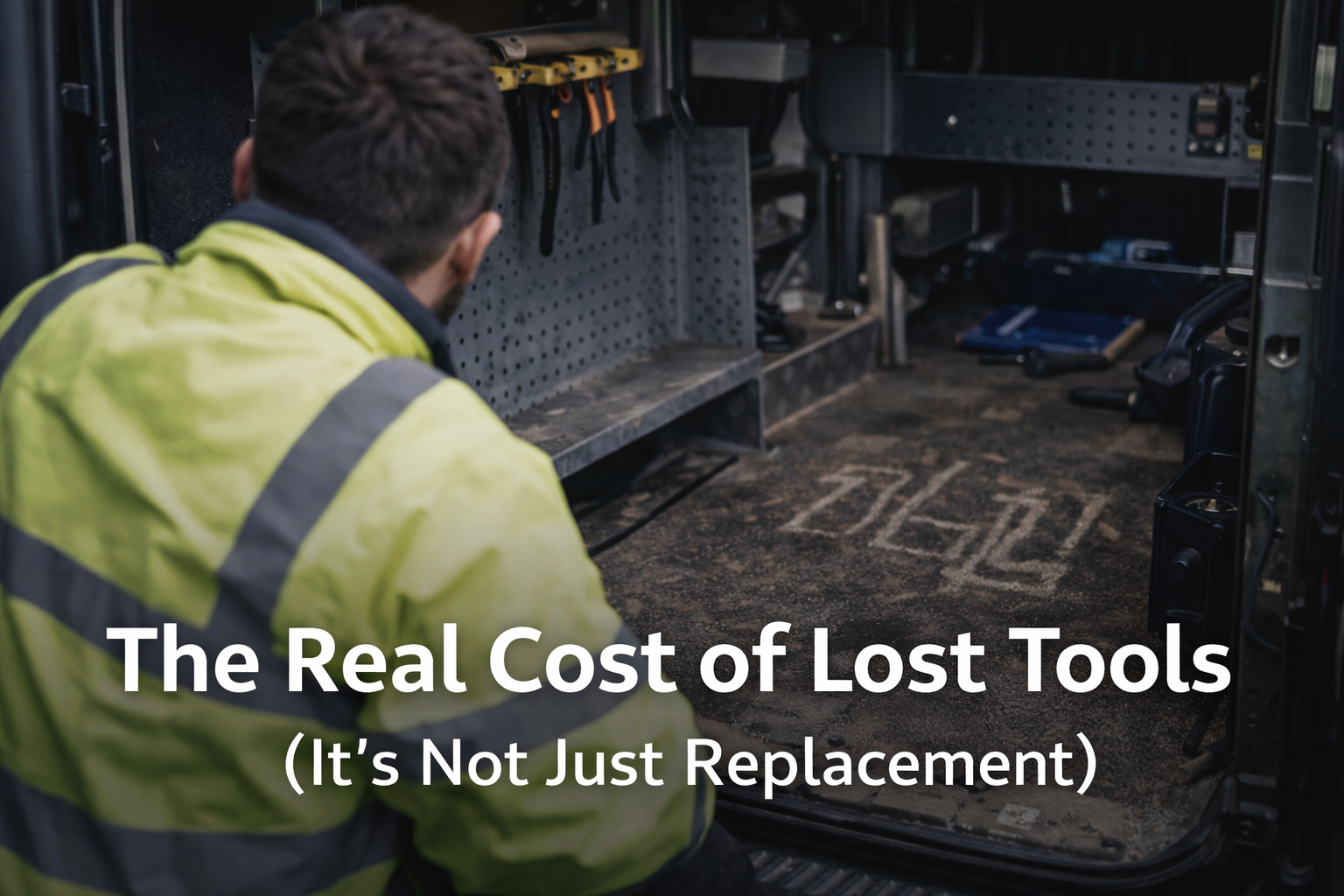
You lose a tool.
First thought?
“How much is it to replace?”
£80. £200. Maybe £500.
You replace it, crack on, and move forward.
But the real cost of losing a tool is rarely just the price of buying another one.
The hidden cost most trades overlook
When a tool goes missing, the impact goes beyond the tool itself.
It affects:
your time
your workflow
your jobs
your income
And it usually happens at the worst possible moment — mid-job.
Where the real cost shows up
1. Lost time on site
You spend time:
looking for the tool
asking around
checking vans and storage
That’s time not spent working.
Even 30–60 minutes lost can throw off your whole day.
2. Job delays
If the missing tool is essential, the job slows down or stops.
That can mean:
coming back another day
rescheduling other work
upsetting customers
One missing tool can affect multiple jobs.
3. Lost productivity
You might:
share tools between workers
work less efficiently
use the wrong tool for the job
Everything takes longer.
4. Repeat purchases
Without proper tracking, tools often get:
replaced unnecessarily
duplicated
bought again because “we thought it was gone”
Over time, this adds up more than most people realise.
5. Admin and stress
Then there’s everything else:
checking receipts
dealing with insurance
trying to remember details
chasing people
It’s not just frustrating — it’s time-consuming.
Why this keeps happening
Most trades don’t have a proper system for tools.
Instead, they rely on:
memory
informal tracking
“we’ll know if something’s missing”
That works… until it doesn’t.
And when it breaks, it costs more than expected.
What good looks like
To reduce the real cost of lost tools, you need a simple system in place.
That includes:
a clear tool register
knowing who has what
storing proof of ownership
being able to check tool status quickly
Not complicated — just consistent.
A simple way to improve things
Start with your most used or most valuable tools.
Make sure you:
Record what you own
Know where it should be
Keep key details (serial number, photos, receipts)
Keep everything in one place
Even small improvements here can save time and money quickly.
Making it easier long-term
The biggest challenge isn’t starting — it’s keeping things organised.
Spreadsheets and notes can work at first, but they often become:
outdated
incomplete
hard to manage
That’s where having a dedicated system helps.
Tools like ToolSafe are designed to keep everything — tool records, ownership proof, and status — in one place, so you’re not relying on memory when something goes missing.
Final thought
Losing a tool might seem like a small issue.
But the real cost is:
👉 time
👉 disruption
👉 lost productivity
And that adds up fast.
Final thought
Tool theft might be common, but being unprepared does not have to be.
The difference between recovering a tool and losing it for good often comes down to one thing:
Can you prove it is yours?
Get started
If you want a simple way to keep track of tools and avoid unnecessary losses: